March of the Nations 2026 – Update on the Security Situation
The current situation in the Middle East understandably raises questions about the possibility of holding the March of the Nations, which is scheduled to take place from May 31 to June 3, 2026, in Jerusalem and other cities of Israel.
We are in close and ongoing contact with Israeli authorities and have received positive feedback from various municipal governments: they are looking forward to holding the local marches—as soon as the security situation allows.
We are firmly planning to hold the March of the Nations on-site on the announced date—provided the security situation allows it. Now more than ever, it is important to send a visible message of solidarity and support for Israel!
The only situation in which a complete cancellation would be unavoidable is if the authorities were to close the airspace or ban public gatherings.
What does this mean in practical terms for interested parties and participants?
- Register now and start planning your trip: We encourage everyone to register for the March of the Nations now and begin preparing for the trip. If the event has to be canceled, the ticket fee will be refunded
- Booking flights with Israeli airlines: We recommend booking flights only with Israeli airlines (El Al, Arkia, Israir, Air Haifa) or airlines affiliated with Israel (Bluebird, Smartwings). These airlines are highly likely to resume their flights to Israel once the airspace reopens.
- Prefer cancellable rates: We recommend choosing cancellable rates for flights and hotels so you can respond flexibly to changing circumstances. The March of the Nations cannot be held responsible for cancellation fees in the event of a cancellation.
- Program changes are possible: Depending on how the situation develops in Israel, adjustments may be made to the planned program.
The March of the Nations Organizing Team
Sun May 26, 2024, Jerusalem
07:30 pm – 10:30 pm: Kick-off Event Conference
Mon May 27, 2024, Jerusalem
08:00 am – 11:00 am: Morning Session Part 1
11:30 am – 01:00 pm: Morning Session Part 2
03:00 pm – 04:30 pm: Afternoon Session
07:00 pm – 09:30 pm: Evening Session with Exodus-Musical
Tue May 28, 2024, Cities throughout Israel
Morning: Bus Departure from Jerusalem
11:00 am – 01:00 pm: Encounter Meetings in the Cities
05:00 pm Marches in the Cities and Closing Event
Night: Transfer back to Jerusalem
Save the Date
March of the Nations
2027 & 2028
Two anniversaries. Two marches. One message from the nations to Israel: You are not alone.
202760 Years Jerusalem United · 1967–2027

May 23–26, 2027
Sunday – Wednesday · Jerusalem & cities all over Israel
Come and declare together in Jerusalem and cities all over the country: Israel you are not alone!
202880 Years Israel · 1948–2028

May 14–17, 2028
Sunday – Wednesday · Jerusalem & cities all over Israel
From Holocaust to new Life. Let’s celebrate together in Jerusalem!
Registration opens later. Save the dates now – and look back at the March of the Nations 2026 below.
Go directly to: Review 2026 | Media | Exhibition
Countdown
The nations are coming to Jerusalem
60 Years Jerusalem United
March of the Nations 2027
Day(s)
:
Hour(s)
:
Minute(s)
:
Second(s)
80 Years Israel
March of the Nations 2028
Day(s)
:
Hour(s)
:
Minute(s)
:
Second(s)
What to expect
Four days. One message.
Conference in Jerusalem
Marches in cities all over Israel
Declare: Israel, you are not alone
More details and registration will be published here. Bookmark marchofthenations.com.
Looking back
This was the March of the Nations 2026!
A sign of solidarity in Israel
At the end of May 2026, 230 people from 12 nations came to Israel for the March of the Nations.
230
Participants
12
Nations
26
Organizers and Directors
5
Cities in Israel
A sign of solidarity in Israel
The conference participants, including 26 organizers and directors of Marches of Life, would not be deterred by high airfares or the volatile security situation during Israel’s war against Iran and its proxies.
They came to Jerusalem and to several cities across Israel to stand visibly alongside the Jewish people.
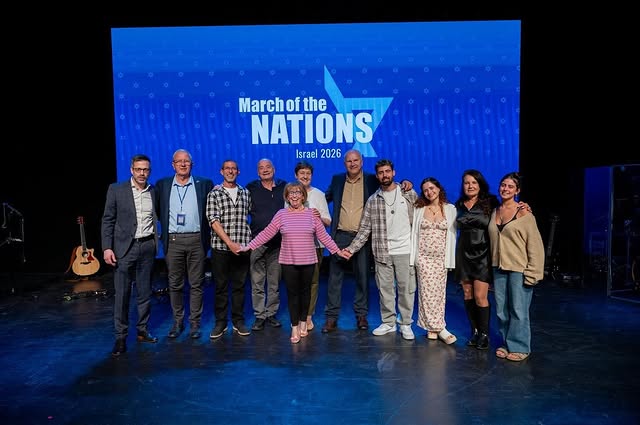
Encounter Event at Beit HaAm
The conference began with a gathering at Beit HaAm, attended by more than 100 Israeli guests. The attendees were particularly happy about the presence of former hostage Guy Gilboa-Dalal.
Last year, his father Ilan Dalal had spoken at the conference while his son was still held captive in the Hamas terror tunnels in the Gaza Strip. March of Life President Jobst Bittner presented Guy with a picture of the location where, among many other places, people had prayed for him around the clock. Addressing the crowd, Guy said: “You are the reason I am sitting here today.”
As descendants of Nazi perpetrators, two young members of the YC Dance team, Jordana Pfeiffer and Samuel Haas, shared their family histories. Afterward, Heinz Reuss interviewed the two former hostages, Luis Har and Guy, as well as Holocaust survivor Irene Shashar about their survival strategies while in captivity and their hopes for the time afterward.
Irene Shashar said: “Your marches are the voices of your hearts. We need you now more than ever before!” Luis Har danced with the YC Dance team. The evening concluded in joy, dancing and fellowship.
First Day of the Conference: Teaching and Concert
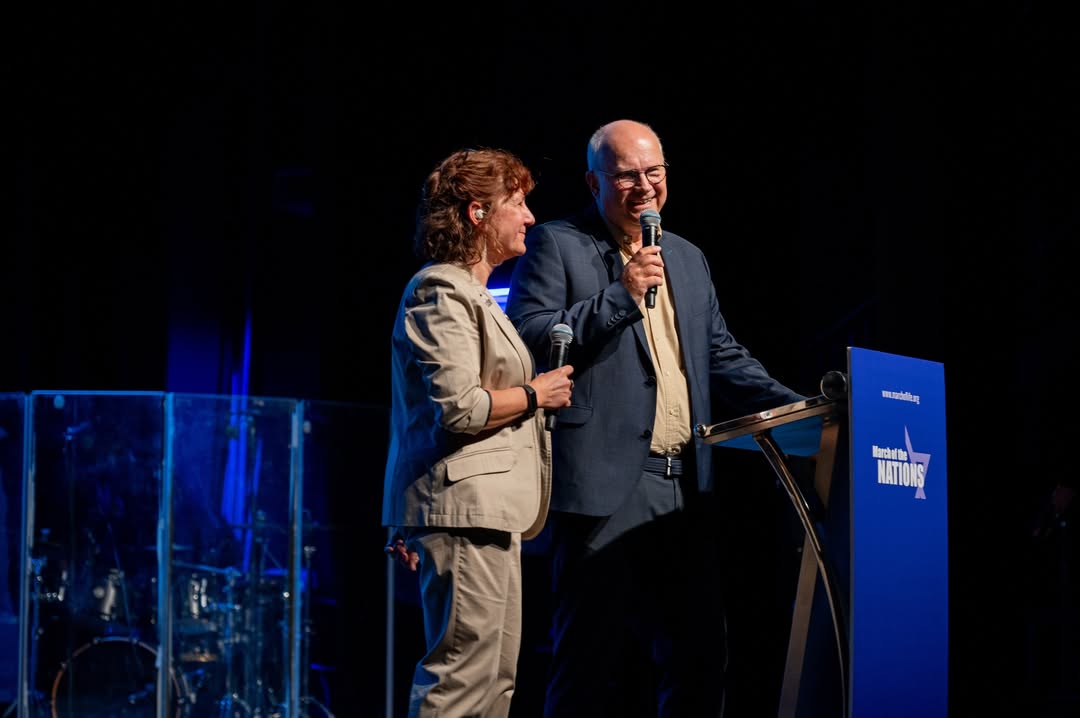
On Monday morning, Jobst Bittner and Stefan Haas ushered in a time of prayer with powerful biblical teachings. Stefan Haas spoke about God’s humility and human pride. Speaking about Mount Zion, he said: “God does not choose the highest mountain. He chooses what is lowly.”
Jobst Bittner taught on the central end-time significance of Jerusalem and the example of Daniel’s prayer for the restoration of Jerusalem. The time of prayer served as preparation for prayer meetings on the Mount of Olives, in the Valley of Jehoshaphat, and at the Pool of Siloam.
On Monday afternoon, Israel’s Deputy Foreign Minister Sharren Haskel spoke. As the granddaughter of Holocaust survivors, she recalled her grandfather, who was murdered in Auschwitz. She praised the work of March of Life and said: “May you be blessed in everything you do!”
Edward Ćwierz spoke about the importance of repentance and prayer and about the situation in Poland. Monday evening was dedicated to Arab-Israeli reconciliation with a special concert. The Arab singer Nizar Francis sang worship songs in Arabic, Hebrew and English.
Marches in the Cities
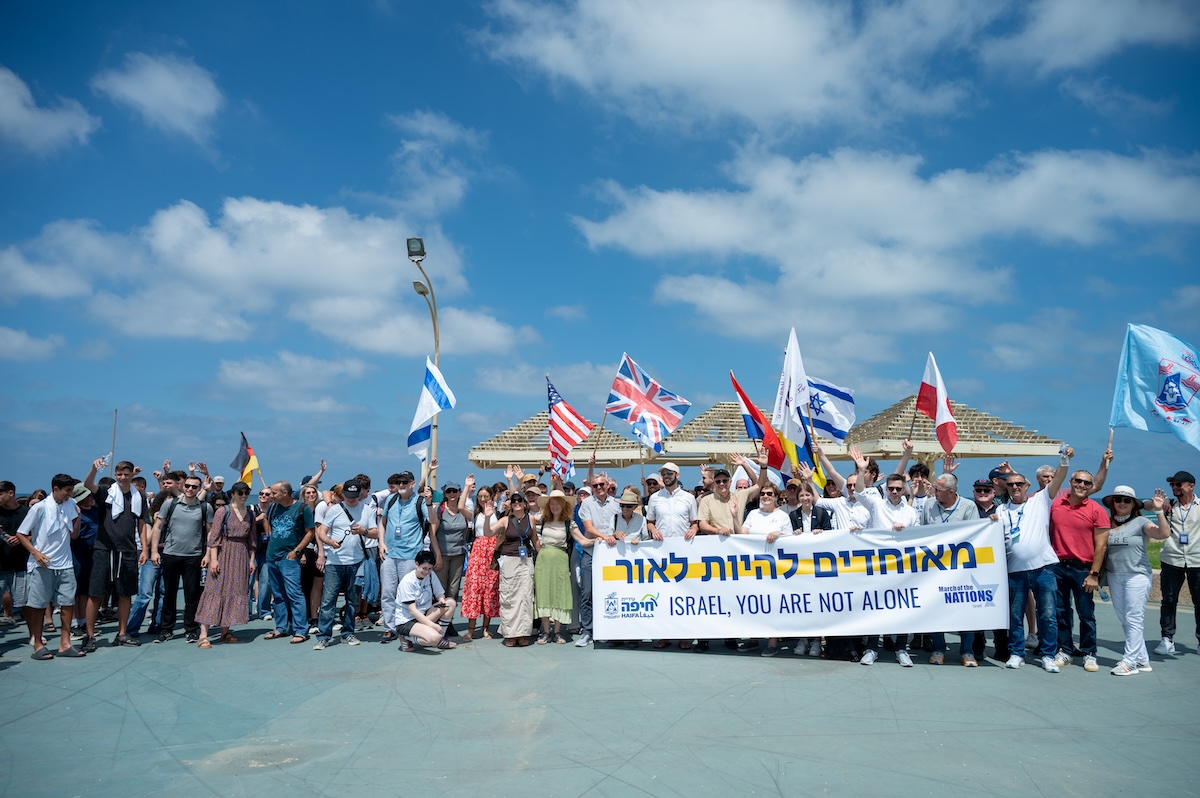
On Tuesday, the participants traveled by bus to five different cities in Israel: Haifa, Be’er Sheva, Ashkelon, Tiberias, and Netanya. There, they held marches and encounter events. They met with mayors, Holocaust survivors, pupils, college students, and people affected by the massacre of October 7.
Israel’s First Lady, Michal Herzog, received a group of young March of Life representatives.
In Haifa, 93-year-old Naftali Fürst shared his story. As a child, he survived several concentration camps and a death march. Joining him on the panel were Thomas Waldert and his daughter Leonie Feininger, who spoke about their family’s involvement in the Nazi regime.
Naftali Fürst said: “I am very happy that I now have the opportunity to meet the second and third generations from the other side. Thank you for your wonderful work!”
Jobst Bittner recounted his own family’s story during the Nazi era and promised that the March of Life movement would continue to stand unwaveringly alongside Israel.
Prayer for Jerusalem and Exhibition
The conference concluded with powerful prophetic prayer sessions on the Mount of Olives, in the Valley of Jehoshaphat, and at the Pool of Siloam, a place of sending. From there, the participants were sent back to their nations with the message of March of Life.
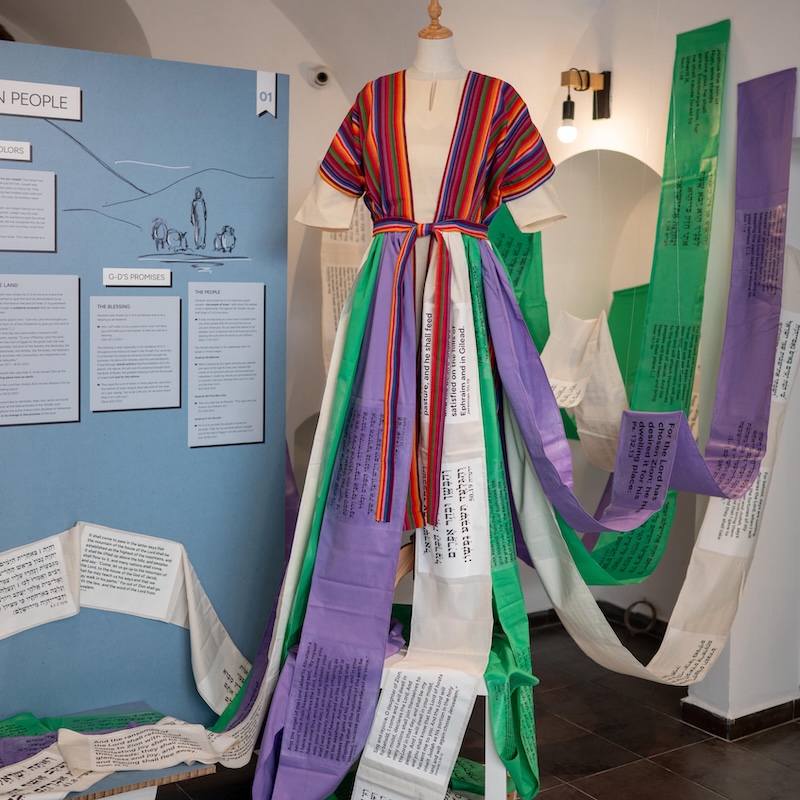
Later that evening and the following day, they were able to visit the newly opened March of Life exhibition “From Foes to Friends” at 6 Yosef Rivlin Street in Jerusalem. It depicts the tragic history of Christian antisemitism and the response conveyed by the March of Life movement: reconciliation through truth and repentance.
In this way, the message remains in the heart of Israel even after the 2026 March of the Nations has come to an end.
Media Coverage
The March of the Nations 2026 was covered by Israeli media, online portals, radio and social media.
Ynet / Yedioth
Print and online report
Language: Hebrew
Instagram – Ynetgram
Impressions
Language: Hebrew / Instagram
Instagram – Ynet Global
Moment from the March
Language: English / Instagram
Radio Jerusalem / Info Buzzer
“יומן הבוקר”, June 10, 2026
Language: Hebrew
News08
Report from Be’er Sheva
Language: Hebrew
BR7 News
Report from Be’er Sheva
Language: Hebrew
B7Net
“We will not remain silent”
Language: Hebrew
Rashuiot
Municipal report
Language: Hebrew
Ynetnews
Jewish World report
Language: English
Mako
Reporters’ chat item
Language: Hebrew
Exhibition “From Foes to Friends”
The exhibition in Jerusalem shows the history of Christian antisemitism and the message of the March of Life movement: reconciliation through truth and repentance.